-

-

-

-

-

-

-

-

-

-

-

-

-

-

-

-

-

-

-

-

-

-

-

-

-

-
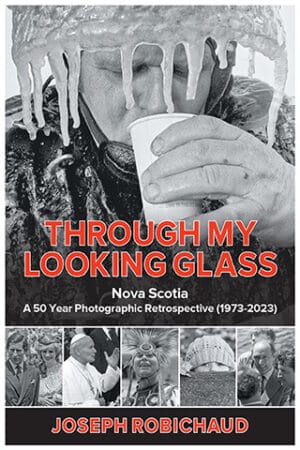
Through My Looking Glass: Nova Scotia: 50 Year Photographic Retrospective 1973-2023
Photographer: Joseph RobichaudPublisher: Pottersfield Press$27.95Through My Looking Glass is the culmination of fifty years of documentary photography in Nova Scotia, spanning from 1973 to 2023. It chronicles a half-century of life in a province where the intertwining of diverse cultures and experiences creates a rich and multifaceted narrative. The striking images in this book reflect the many threads of Indigenous, Acadian, and Black experiences. The Mi’kmaq people, the original stewards of this land, have walked these shores for millennia, forging a deep connection with the natural world. Their resilience has shaped the province?s identity, and their stories are integral to understanding Nova Scotia?s historical and spiritual landscape.
-

Making a Life Twenty-Five Years of Hooking Rugs (pb)
Publisher: Nimbus Publishing$34.95A paperback edition of the heartfelt memoir and coffee table book from beloved rug-hooking artist, featuring images of her favourite projects over the span of her career.
-

-

-

The Race to the Bottom How Scuba Diving in Nova Scotia Saved My Life
Publisher: Pottersfield Press$21.95This is the story of one man’s hobby and its overwhelmingly positive effect physically, emotionally, socially, and mentally on his life. The hobby is scuba diving, but not on the reefs of southern seas. This is about diving in Halifax Harbour. Diving summer and winter in one of the biggest and deepest harbours in the world has given Bob a view of history that few will ever witness.
Inquisitive and energetic, the author spins yarns about the strange and fascinating objects he finds and the hair-raising moments he has experienced, from coming to the surface and seeing the boat drifting out of sight to arriving on the surface in a snowstorm and having to navigate by compass to find the shore.
The bottom of Halifax Harbour has collected artifacts over the centuries from around the world. Each find gets picked up, cleaned, researched, and documented. The author’s database is a gold mine of little details about what arrived, eventually got dumped into the ocean, and is now sitting on display at home and in museums as a reminder of what once was.
The author takes the reader under warships, container ships, and tugboats, through huge docks, and under the ice. Along the way, he reflects on the toll that our civilization is taking on the ocean, of seagulls trying to break open golf balls to find food, of crabs trapped inside tires, and fish that take refuge in castoff bottles and grow too big to stay in but also too big to get out.
-

The Painted Province Nova Scotia Through an Artist’s Eyes
Publisher: Pottersfield Press$24.95“I gain a strong sense of interconnectedness and belonging when I look at her work. There is a universality and humanity Joy finds every time.” —Sheree Fitch
Since 1972, Joy Laking has lived and painted in Nova Scotia, capturing beauty in watercolours, oils, and acrylics in many locations. She sees beauty in both the usual and the unusual. The Painted Province lets the reader see Nova Scotia through an artist’s eyes.
Here, Joy has grouped some of her favourite paintings into forty regions, each with her personal commentary. In each of the regions, one of the images will have its GPS coordinates. You are encouraged to bring this book along in your travels to find some of the places where she created paintings. When you discover the exact spot, please take a photo. Then email it to her and she will post it on her website.
Joy constantly finds ways to enhance her own creativity. Every year, she paints in unfamiliar countries, such as Bolivia, Ghana, India, and Sri Lanka, to return home to see Nova Scotia through fresh eyes. Joy has also written a play, children’s books, articles about rural life, and work for the CBC.
-

Mean Streets In Search of Forgotten Halifax, 1953-1967
Publisher: Pottersfield Press$21.95Following the Second World War, a new generation of politicians and planners across North America set out to reimagine their cities. With great verve and vision, they conceived of brave new urban landscapes filled with elevated highways, modern housing, thriving businesses, and engaging public spaces. All it would take, they said, was a deep collective capacity to dream and a determined willingness to wipe away the past.
And the idea caught on.
With great enthusiasm, these politicians and planners set out to realize their grand vision. They proposed that cities tear down great swaths of their aged, derelict, and decaying homes; destroy antiquated, dilapidated buildings; and tear up sordid streets in an effort they called “slum clearance.” Of course, these “slums” were also communities often populated by the most vulnerable members of the city, the desperately poor and people of colour, those who had little power to make their own decisions and determine their own fate. The whole process was called urban renewal.
Nimbus Publishing and Vagrant Press